
If your child cannot read yet, and you are starting to worry… You are not alone.
You have tried pointing at words, repeating them again and again, hoping something will click, and instead, you are met with silence or guessing.
That quiet panic creeps in: “Am I doing something wrong?”
Mama, take a deep breath.
You are not failing your child.
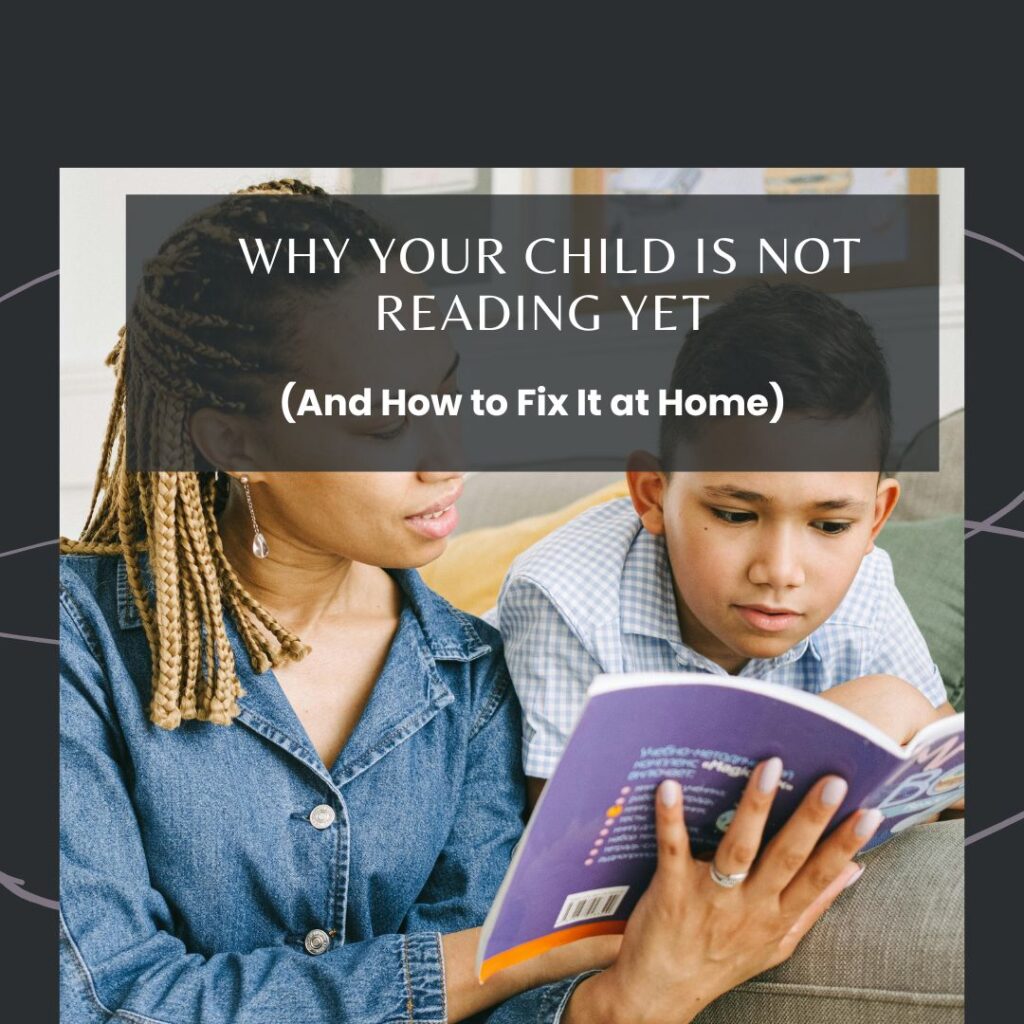
If you have been asking yourself why your child is not reading yet, this post will help you understand what is really going on.
But there are some things you might not know yet, and once you do, everything can change.
In this post, we are going to look at the real reasons children struggle to read, what you can do about it at home, and how God’s Word can actually be part of the solution.
This post is part of my Teaching Toddlers to Read series. If you are just getting started, you can read Part 1 here.
The Real Reasons Children Struggle to Read
1. They Have Not Been Taught How Sounds Work
Reading is not natural; it is a skill that must be taught step by step.
Many children struggle because no one has broken down how letters make sounds and how sounds make words. This is called phonics, and it is the foundation of everything.

Without phonics, children guess. They memorise word shapes rather than decoding them. And when the words get longer, they get lost.
In my first post in this series, I talked about why teaching letter sounds (not just the alphabet) is the best place to start. Understanding sounds is the key that unlocks reading for your child.
2. They Have Lost Confidence Before They Have Even Begun
Children who struggle early start to tell themselves a story: “I am not a reader.”
And once that story takes root, getting them to try becomes a battle in itself.
The struggle is not just academic. It is deeply emotional.
This is why the words we speak over our children matter more than any curriculum we buy.
Belief is a seed. Plant it generously. Water it daily with your words.
3. Reading Is Not Part of the Daily Rhythm at Home
This one is important and worth saying gently: if books are not part of your home environment, children do not see reading as something real people do.
They see it as a school thing. A chore. Not a world they belong to.
Here are some of my favourite books to keep around the house and make reading feel like a normal, joyful part of your day:
- The Beginner Bible
- Bob Books Set 1 by Bobby Lynn Maslen
- The Very Hungry Caterpillar by Eric Carle
I have curated a list of some of our favorite books. You can get a copy here
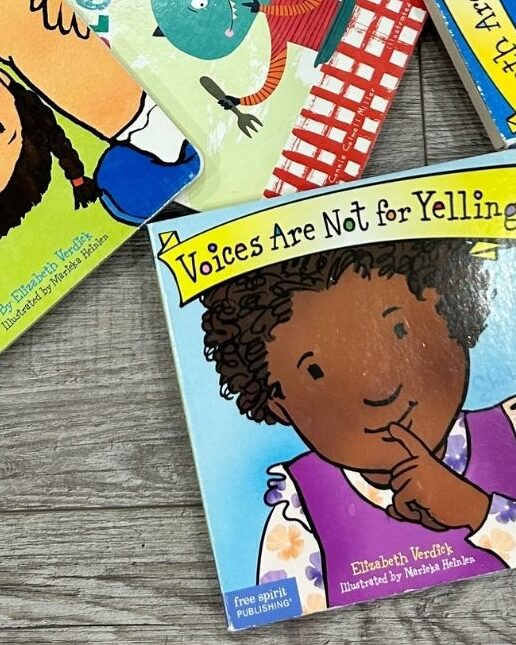
A few good books, read over and over, build more literacy than 50 books read once.
Visit your local library, check Facebook Marketplace, or swap books with other moms.
Start with just one. Read it every day. Watch what happens.
4. Every Child’s Timeline Is Different
Some children read fluently at 5.
Others are not ready until 7 or 8 and that is completely okay.
Comparing your child to the child next door or in their class will only steal your peace and shake their confidence.
Your child is on their own path.
And God’s timing is always perfect.
What God’s Word Says About Teaching Your Child
“Train up a child in the way he should go, and when he is old he will not depart from it.” — Proverbs 22:6
Notice it says train. It does not say rush, compare, or panic.
Train, which means consistency, patience, and showing up day after day, even when progress feels slow.
This is not pressure. It is permission to go at your child’s pace.
Teaching your child to read God’s Word starts with teaching them to read.
And that is holy work.
3 Things You Can Start Doing Today
1. Read Aloud Together Every Day (Even for 10 Minutes)
It does not have to be a lesson.
It can be a Bible story, a picture book, anything.
Let your child hear fluent reading.
Let them fall in love with stories before they have to decode them alone.
Consistency over perfection, always.
Here are some books you can read with your kids. Get the list here
2. Play With Sounds Before You Play With Letters
Clap syllables in words.
Rhyme silly sentences together.
Sing the alphabet slowly and talk about what sound each letter makes.
Make it a game, not a test.
I go deeper in this blog, where I share exactly how we introduced letter sounds with Ari.
3. Speak Life Over Your Child’s Learning
Instead of:
“Why can’t you read this?”
Try:
“We are still learning this one, and we will get it.”
The words we say over our children become the words they say to themselves.
Do You Need More Support?
If you have been trying and still feel stuck, you do not have to figure this out alone.
I offer personalised support for parents who want a clear, simple plan to help their child start reading with confidence.
Click here to book a simple, step-by-step plan tailored to your child.
What About You?
What is one reading challenge you are facing with your child right now?
Drop it in the comments below. I read every single one.
My boys are still too small to read but I found this to be interesting and educational! Thankfully they already love being read to 🙂
Amazing!!!It will make a lot of difference when they are ready to learn how to read! Welldone mama 🙂